
Quentin Tarantino Wiki, Height, Age, Family, Wife, Net Worth and Career
Quentin Tarantino born on March 27, 1963, is an American director, actor, and writer distinguished for his unique approach
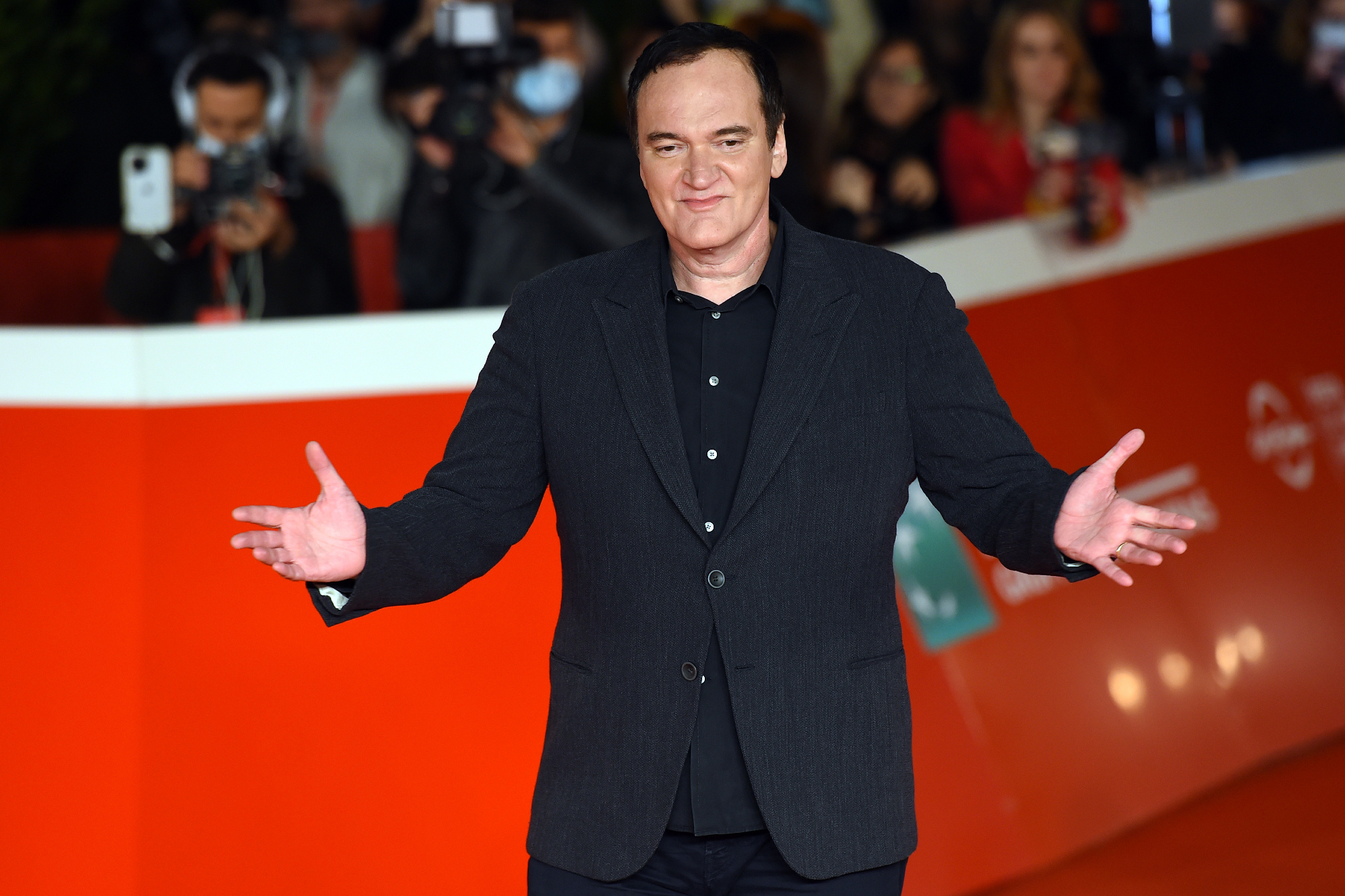
Quentin Tarantino born on March 27, 1963, is an American director, actor, and writer distinguished for his unique approach that fuses stylized brutality, witty and often explicit dialogue, and numerous pop culture allusions. His creations have gained a passionate cult audience as well as extensive critical praise and commercial success.
Acknowledged as one of the most impactful filmmakers of his era, Tarantino has been honored with several prestigious accolades, including two Academy Awards, two BAFTA Awards, and four Golden Globes. His films, in total, have earned over $1.9 billion at the global box office. Tarantino’s ascent began with the independent crime movie Reservoir Dogs in 1992.
He achieved worldwide recognition with his second feature, the 1994 crime-comedy Pulp Fiction, which won the Palme d’Or at the Cannes Film Festival and secured the Oscar for Best Original Screenplay. His movies are known for their stylized violence, a strong element of satire, and complex, non-linear narratives that audiences have widely embraced. Over his career, Tarantino has accumulated substantial wealth, with an estimated net worth currently standing at $120 million.
Who is Quentin Tarantino?
Quentin Tarantino born on March 27, 1963, in Knoxville, Tennessee, is an acclaimed filmmaker from the United States recognized for his unique narrative techniques and creative dialogue. Relocating to California at the age of four, his enthusiasm for cinema developed at a young age. His career in film commenced at a video rental shop called Video Archives, where he wrote screenplays for major films like True Romance and Natural Born Killers.
His first directorial effort, Reservoir Dogs, released in 1992, brought him considerable fame and established him as a key player in the realm of independent film. However, it was his 1994 masterpiece Pulp Fiction that launched him to global fame, winning him the Academy Award for Best Original Screenplay.
Quentin Tarantino Wikipedia/Biography
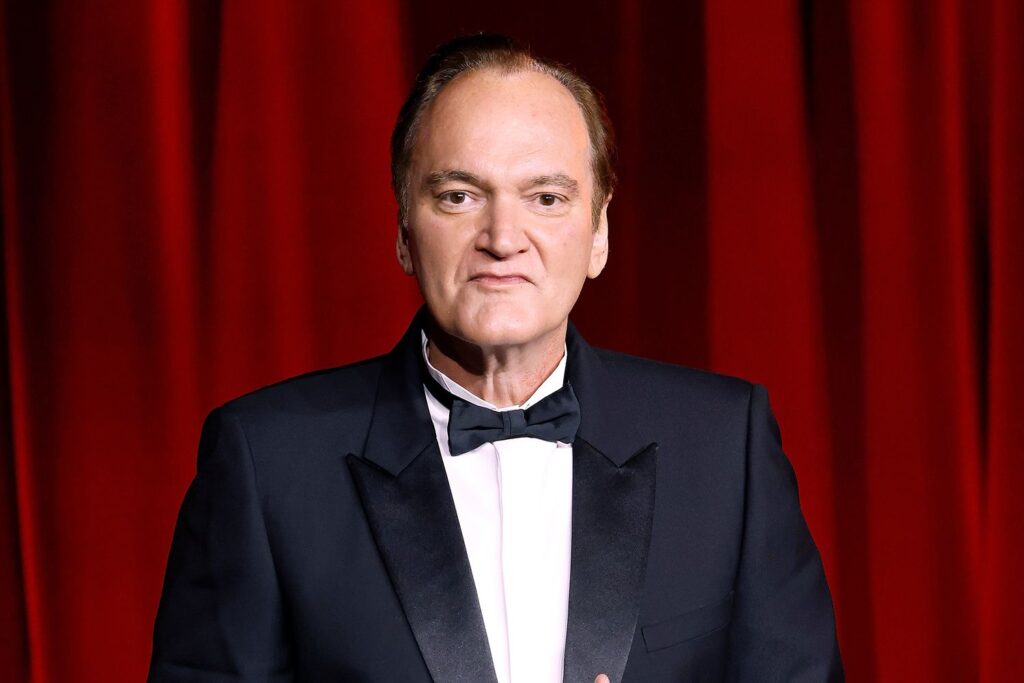
Quentin Jerome Tarantino, born on March 27, 1963, in Knoxville, Tennessee, is an American filmmaker, actor, and screenwriter famous for his distinctive style and major impact on contemporary cinema. He initiated his professional journey in the realm of video rentals, which allowed him to cultivate a profound love for movies that would later define his unique narrative technique.
Tarantino’s first venture as a director was “Reservoir Dogs” (1992), a crime drama characterized by its non-linear storytelling and witty dialogue that quickly established him as a bold newcomer in Hollywood. His significant rise to fame occurred with “Pulp Fiction” (1994), which received the Palme d’Or at Cannes and garnered the Academy Award for Best Original Screenplay.
This film is lauded for its clever dialogue, diverse soundtrack, and atypical narrative style, motivating a fresh wave of filmmakers. Quentin Tarantino further solidified his standing with films such as “Jackie Brown” (1997), “Kill Bill” Volumes 1 and 2 (2003, 2004), “Inglourious Basterds” (2009), “Django Unchained” (2012), “The Hateful Eight” (2015), and “Once Upon a Time in Hollywood” (2019).
These films frequently explore themes of violence, revenge, and redemption, skillfully merging humor, cultural references, and homages to various cinematic styles.
| Real Name | Quentin Jerome Tarantino |
| Short Name | Quentin Tarantino |
| Current Age | 62 years old |
| Profession Build | Film director, film producer, screenwriter, and actor |
| Years Active | 1987–Present |
| Works | Filmography |
| Books | Cinema Speculation, Django / Zorro, Tarantino Pack – 1998, Natural born killers, Once Upon a Time in Hollywood, and More |
| Style | Crime, drama, action, Spaghetti, Western alternate, history, black, comedy, and neo-noir |
| Awards | Best Screenplay, Best Film, Best Director |
| Date of Birth | 27 March 1963 |
| Birth Place | Knoxville, Tennessee, U.S |
| Marital Status | Married |
| Wife Name | Daniella Pick (m. 2018) |
| Current Net worth | $120 Million |
| Ethnicity | He is of Cherokee and Irish descent through his mother; His father is of Italian descent. |
| Zodiac Sign | Aries |
| Religion | Christianity |
| Nationality | American |
Quentin Tarantino Age
Quentin Jerome Tarantino born on March 27, 1963, in Knoxville, Tennessee, is an American filmmaker, actor, and screenwriter famous for his distinctive style and major impact on contemporary cinema. Quentin 62 years old as of 2025. Her next birthday will be celebrated on March 27, 2026.
Quentin Tarantino Height and Weight
Quentin Tarantino tall stature standing at 6 feet 1 inches or 185 centimeters (1.85 meters), is paired with a weight of 90 kilograms or 199 pounds, contributing to her statuesque look.
| Height | 6 feet 1 inches (1.85 m) |
| Weight | 90 kg (199 lbs) |
| Hair Color | Dark Brown |
| Eye Color | Dark Brown |
Quentin Tarantino Early Life & Education
Quentin Tarantino born on March 27, 1963, in Knoxville, Tennessee, has Italian and Irish ancestry. His mother, Connie Zastoupil, possesses Irish and French roots, while his father, Tony Tarantino, traces his lineage to Italy. Growing up in a Catholic environment, Tarantino’s formative years were shaped by his mother’s second marriage to Curtis Zastoupil, who adopted him.
His biological father, Tony, a musician and actor, played a minimal role in his upbringing. Additionally, Quentin has a half-sister, Rachel Zastoupil, from his mother’s second marriage. His siblings include Edward James Tarantino, Tanya Marie Tarantino, Ron Zastoupil, and Ronnajean Tarantino.
Quentin Tarantino’s educational path was nontraditional. He attended Beverly Hills High School for a limited time but did not complete his studies instead, he pursued acting lessons at the James Best Theatre Company in North Hollywood. His true education stemmed from his tenure at Video Archives, a rental store in Manhattan Beach, California, where he explored a wide array of films, ranging from classic Hollywood to global cinema.
Tarantino took on numerous odd jobs while continuing his work at Video Archives, which greatly influenced his cinematic knowledge and preferences. During this phase, he also began accepting minor acting roles and started crafting scripts. He collaborated with Craig Hamann on “My Best Friend’s Birthday” (1987), a project that was never finalized but eventually led to his first significant script sale with “True Romance,” which underwent considerable reworking by others prior to its release.
| School | Narbonne High School, Alexander Fleming Middle School |
| University/College | Narbonne High School, Alexander Fleming Middle School |
| Degree | Graduation |
Quentin Tarantino Personal Life

In the early 1990s, Tarantino was romantically involved with comedians Margaret Cho and Kathy Griffin. From 1995 to 1998, he had a relationship with actress Mira Sorvino. Following that, he dated filmmaker Sofia Coppola from 2003 to 2005. In June 2017, Tarantino became engaged to Israeli singer Daniella Pick. The couple wed in November 2018 and are parents to a son and a daughter. They divide their time between Los Angeles and the Ramat Aviv Gimel neighborhood of Tel Aviv, Israel.
Quentin Tarantino Family
| Father | Tony Tarantino |
| Mother | Connie Zastoupil |
| Siblings | Ronnajean Tarantino, Ron Zastoupil, Tanya Marie Tarantino, Edward James Tarantino |
Quentin Tarantino Wife
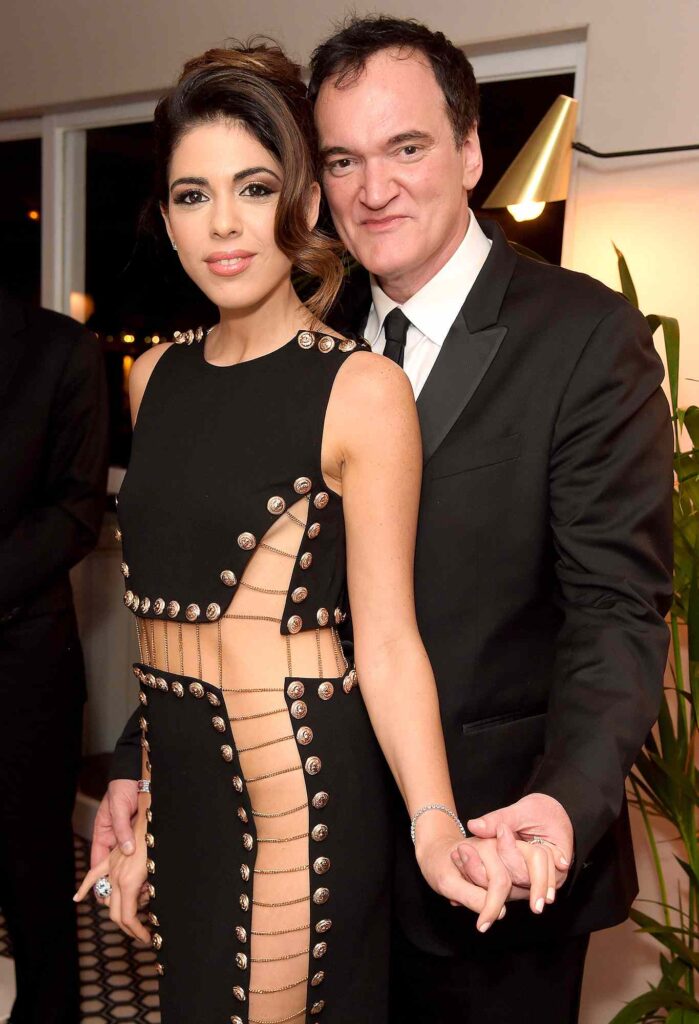
Quentin Tarantino meet Daniella Pick, an Israeli model and singer, on November 21, 1983, in 2009 while promoting his movie Inglourious Basterds in Israel. Even with a notable age gap—Tarantino was born on March 27, 1963 the pair began a romantic relationship. They separated in 2012 but rekindled their connection in 2016, culminating in an engagement in June 2017. They exchanged vows in a small ceremony in Los Angeles in November 2018.
The duo has two kids. Their first child, a son named Leo Tarantino, arrived in February 2020. Contrary to what many think, his name is a tribute to Daniella’s late grandfather and has no ties to Leonardo DiCaprio, even though DiCaprio has worked with Tarantino. Their second child, a daughter, was welcomed on July 2, 2022.
| Relationship Status | Married |
| Wife Name | Daniela Pick |
| Children Name | Two Child |
Who is Quentin Tarantino Wife?
Daniella Pick is an Israeli singer and model, married to Quentin Tarantino. Coming from a family with a rich musical background, Daniella has made a name for herself in the entertainment realm, displaying her skills both in Israel and abroad.
How old is Quentin Tarantino Wife?
Daniella Pick was born on November 21, 1983, which makes her [age as of the current year]. Her energetic personality and creative drive have played an important role in her personal life and career.
Relationship/Girlfriend
Before his marriage to Daniella, Tarantino experienced a few significant romances. He was romantically involved with actress Mira Sorvino from 1995 until 1998, during which time they became engaged but did not go through with marriage. Additionally, he had a connection with filmmaker Sofia Coppola from 2003 to 2005. Nevertheless, his bond with Daniella has proven to be the longest-lasting and most publicly discussed.
Tarantino’s romantic history features personalities like Uma Thurman (2014), Vanessa Ferlito (2014), Serah Henesey (2006-2009), Shar Jackson (2005), Sofia Coppola (2003-2004), Mira Sorvino (1996-1998), and Kathy Griffin (1995). There have also been rumors linking him to Grace Jones (2014) and Julie Dreyfus (1998).
Quentin Tarantino Career/Professional Journey
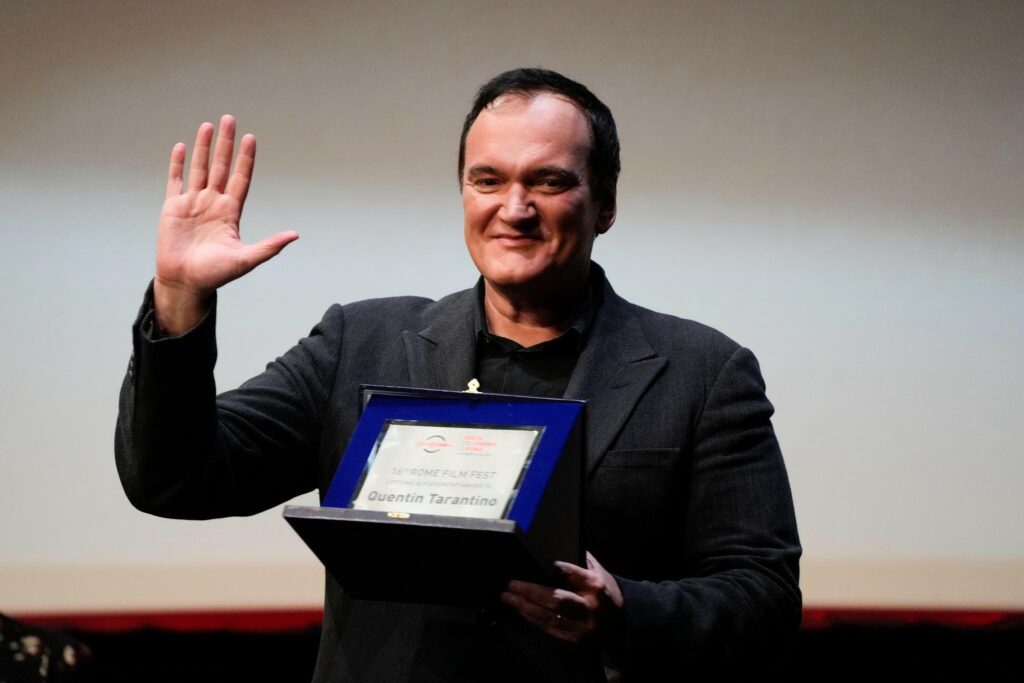
Quentin Tarantino professional journey is marked by a distinctive flair, original storytelling techniques, and a major influence on contemporary film. He initially wrote scripts for True Romance and Natural Born Killers, both of which underwent considerable alterations by others before being produced.
His first film as a director, Reservoir Dogs (1992), showcased a fragmented narrative, intense violence, and clever dialogue, swiftly positioning him as a vibrant new voice in Hollywood, despite the film’s limited budget. His significant breakthrough was with Pulp Fiction (1994), a film that secured the Palme d’Or at Cannes and the Academy Award for Best Original Screenplay.
Renowned for its sharp dialogues, pop culture nods, and nonlinear narrative structure, Pulp Fiction established its legacy and inspired countless directors. He subsequently released Jackie Brown (1997), based on Elmore Leonard’s novel Rum Punch, highlighting his skill in navigating genre bounds while preserving his distinctive voice.
Kill Bill Volumes 1 and 2 (2003, 2004) marked his entry into the action genre, heavily influenced by martial arts movies and spaghetti westerns while delivering a revenge-centered storyline. Inglourious Basterds (2009) offered a reimagined perspective on World War II, merging historical themes with Tarantino’s signature stylized violence and dramatic flair.
Django Unchained (2012) combined features of westerns and blaxploitation films, delving into themes of slavery and revenge, earning Tarantino his second Oscar for Best Original Screenplay. The Hateful Eight (2015) revisited the Western genre, examining a confined group dynamic similar to Reservoir Dogs—this time set in a snowy Wyoming setting.
Once Upon a Time in Hollywood (2019) paid tribute to the Hollywood of the 1960s, intertwining fictional stories with real historical figures and reflecting Tarantino’s nostalgia for the era of classic cinema. Quentin Tarantino has also made brief appearances or smaller roles in movies such as Desperado, Sleep With Me, and Four Rooms.
His films are characterized by non-linear narratives, iconic dialogue, stylized violence, and meticulously selected soundtracks that elevate the mood of each scene. He has indicated intentions to retire from creating feature films after his tenth project, aiming to redirect his efforts towards writing novels or directing television series.
Quentin Tarantino Breakthrough
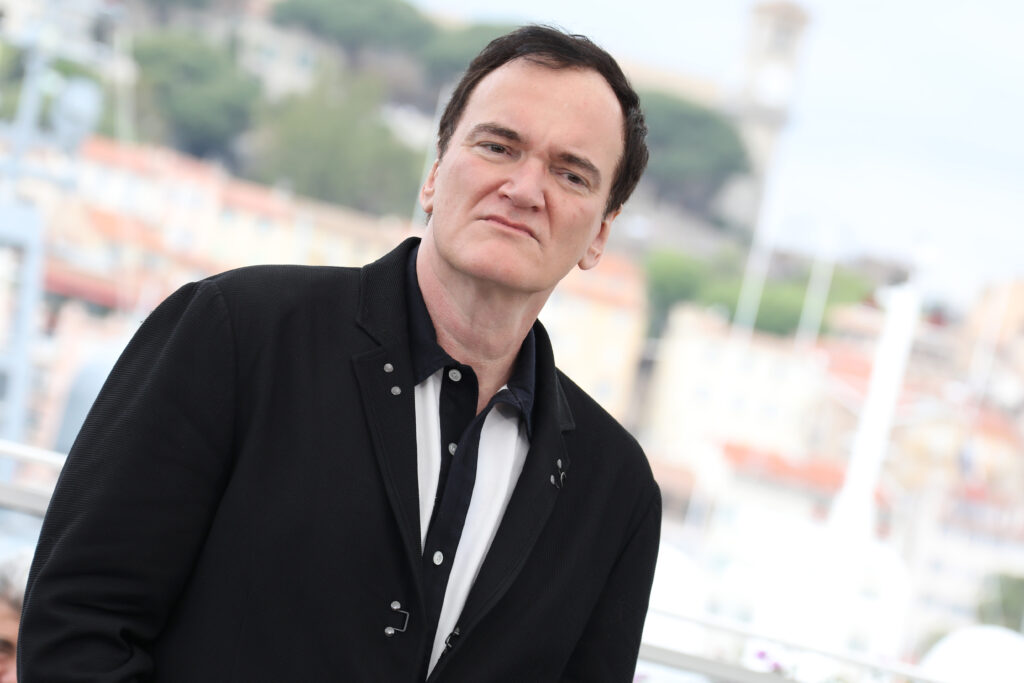
Quentin Tarantino achieved a significant milestone when he was commissioned to craft the screenplay for From Dusk Till Dawn. The movie, however, didn’t premiere until 1996. Prior to this, Tarantino had already penned the script for True Romance, selling its rights before it hit theaters in 1993. Controversy surrounded this film, as Tarantino later mentioned that the script was heavily altered.
He completely distanced himself from it. Regardless, True Romance provided the financial backing he required to produce his first significant film, Reservoir Dogs, which debuted in 1992 and was featured at the Sundance Film Festival. This film showcased Tarantino’s distinctive talent, particularly in his dialogue writing. Its production was made feasible through support from notable figures, including Harvey Keitel, who also starred prominently in the film.
After Reservoir Dogs gained Tarantino recognition in Hollywood, numerous executives sought him out to direct substantial films. During this period, he was open to accepting uncredited writing assignments for various movies, but his desire was to direct a personal creation. He declined several directing offers to focus on writing the screenplay for Pulp Fiction.
Upon its 1994 release, the film demonstrated Tarantino’s capability to rival the most prominent directors globally. It went on to earn over $200 million. Tarantino also featured as an actor in the movie, as he had previously in Reservoir Dogs. By 1996, From Dusk Till Dawn finally premiered, giving Tarantino another opportunity to display his acting skills in a leading part.
In addition, Quentin Tarantino both wrote and directed Jackie Brown in 1997. The film, produced on a limited budget, generated $72 million, further confirming that Tarantino’s films were not only well-received but also financially successful. Tarantino subsequent endeavor was the Kill Bill saga.
This ambitious action picture blended numerous stylistic elements, influenced by spaghetti westerns, classic martial arts films, and Italian horror films, among others. Kill Bill Vol. 1 hit theaters in 2003, followed by Kill Bill Vol. 2 in 2004. Originally, the two films were meant to be shown together, but the extensive runtime necessitated their separation. Collectively, the pair pulled in nearly $335 million at the box office.
In the ensuing years, Tarantino engaged in various projects, including television series and documentaries. His next significant undertaking came when he co-directed Grindhouse alongside Robert Rodriguez, featuring Tarantino’s segment titled Death Proof. He made a grand return to cinema with the 2009 release of Inglorious Basterds.
This film marked his highest box office performance to that point, amassing over $320 million worldwide. However, this record was surpassed in 2012 with Django Unchained, which earned more than $425 million. The Hateful Eight was released in 2015, earning a lesser box office total of $155 million. In 2019, Tarantino launched Once Upon a Time in Hollywood, which nearly reached $375 million in gross revenue.
In November 2022, Quentin Tarantino announced his intention to create an eight-episode TV series in 2023, though he didn’t disclose any further information. He published his debut book, a novelization of Once Upon a Time in Hollywood, in June 2021, followed by a second book titled Cinema Speculation in November 2022. Tarantino has indicated that he plans to produce a 10th and final film before his retirement.
As a producer
Tarantino has leveraged his influence in Hollywood to bring greater visibility to independent and international films. These movies frequently bear the labels “Quentin Tarantino Presents” or “Presented by Quentin Tarantino.” In 1995, he established Rolling Thunder Pictures in partnership with Miramax to distribute several indie and foreign titles.
In 1997, Miramax closed the company due to unsatisfactory sales. Titles released under Rolling Thunder Pictures included: Chungking Express (1994, directed by Wong Kar-wai), Switchblade Sisters (1975, directed by Jack Hill), Sonatine (1993, directed by Takeshi Kitano), Hard Core Logo (1996, directed by Bruce McDonald), The Mighty Peking Man (1977, directed by Ho Meng Hua), Detroit 9000 (1973, directed by Arthur Marks), The Beyond (1981, directed by Lucio Fulci), and Curdled (1996, directed by Reb Braddock).
In 2001, he oversaw the US distribution of the Hong Kong martial arts flick Iron Monkey, which grossed over $14 million globally. By 2004, he facilitated the American release of the Chinese martial arts movie Hero. It debuted at the top of box office charts and ultimately made $53.5 million in revenue.
During his discussions with Lucy Liu regarding Kill Bill, they collaborated on producing the Hungarian sports documentary Freedom’s Fury, which premiered in 2006. When he was introduced to the story of the Blood in the Water match a water polo game between Hungary and the USSR during the 1956 Melbourne Olympics Tarantino expressed enthusiasm, stating, “This is the best story I’ve ever been told. I’d love to be involved.”
In 2006, yet another film labeled “Quentin Tarantino presents,” Hostel, debuted at number one at the box office, accumulating a $20.1 million opening weekend. He also presented The Protector that year and took on the role of producer for Hostel: Part II in 2007. In 2008, he produced Hell Ride, directed by Larry Bishop, a film centered on biker retribution.
As a film exhibitor
In February 2010, Tarantino acquired the New Beverly Cinema located in Los Angeles. He allowed the former owners to continue the theater’s operations but indicated he would offer occasional programming input. He remarked, “As long as I’m alive, and as long as I’m rich, the New Beverly will be there, showing films shot on 35 mm.”
Starting in 2014, he became more involved in organizing the film screenings at the New Beverly, featuring not only his works but also prints from his own collection. In 2021, he revealed that he had purchased the Vista Theatre in Los Angeles, expressing his intent to maintain it as a first-run venue, ensuring it only screens films on film, similar to The New Beverly.
Early Films: “True Romance,” “Natural Born Killers,” “Reservoir Dogs”
Tarantino formative years in the film industry were marked by noteworthy accomplishments, especially during his tenure at Video Archives, a video rental shop in California. It was there that he fine-tuned his scriptwriting abilities, developing screenplays for prominent films like “True Romance” and “Natural Born Killers.” The latter captured the interest of producers, ultimately leading to its production.
Although director Oliver Stone extensively rewrote the film, the controversies surrounding its development contributed to Tarantino’s growing recognition within the industry, highlighting his knack for compelling narratives and sharp dialogue. Tarantino’s first feature film, “Reservoir Dogs,” debuted in 1992 and cemented his place as a vital force in Hollywood. This independent project storytelling and graphic violence, rapidly achieved cult status following its debut at the Sundance Film Festival.
Tarantino faced obstacles, including budget constraints and limited resources, yet he adeptly collaborated with a small ensemble cast featuring Harvey Keitel, Tim Roth, and Michael Madsen. The film’s success represented a pivotal moment in his career, confirming Tarantino as an original voice in cinema and laying the groundwork for his subsequent endeavors.
The Best of Quentin Tarantino
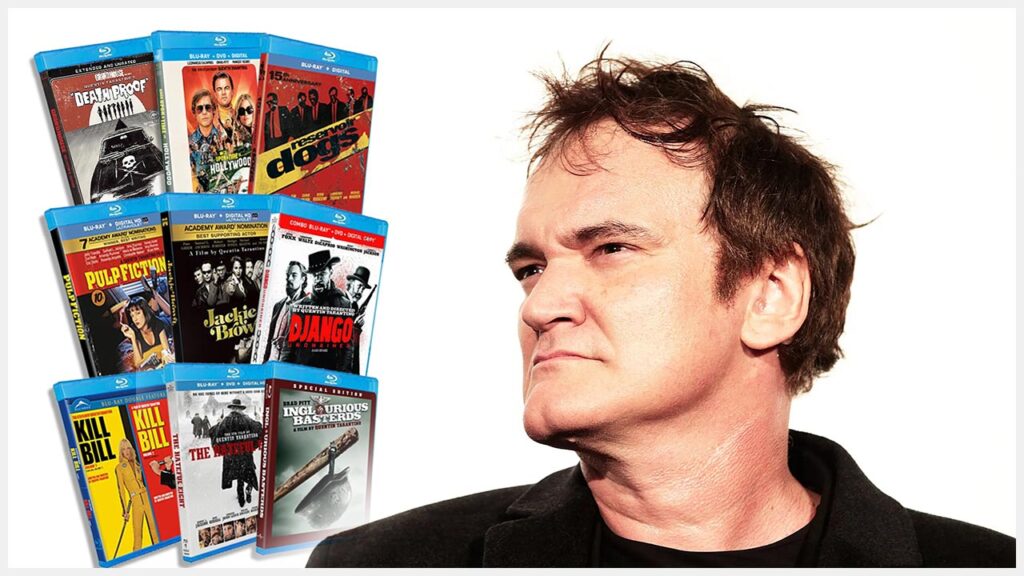
Pulp Fiction (1994)
“Pulp Fiction” is widely celebrated as Tarantino’s greatest work. Debuting in 1994, this innovative neo-noir black comedy crime film is recognized for its non-chronological storytelling, sharp wit, and memorable characters. With performances by John Travolta, Samuel L. Jackson, Uma Thurman, and Bruce Willis, the film interlaces several connected narratives, creating a complex story that remains a significant achievement in film. This work earned Tarantino an Academy Award for Best Original Screenplay and thrust him into global fame.
Kill Bill: Volume 1 (2003) and Volume 2 (2004)
“Kill Bill” pays tribute to martial arts and revenge cinema through the lens of Tarantino’s vision. Divided into two parts, the narrative centers on The Bride, portrayed by Uma Thurman, a former assassin on a quest for revenge against her previous associates. These films are a blend of kinetic violence, striking imagery, and Tarantino’s distinctive dialogue. They reflect his admiration for genre films while skillfully upending familiar conventions.
Django Unchained (2012)
“Django Unchained” boldly tackles the subject of slavery in the antebellum South. Jamie Foxx stars as Django, a freed slave who evolves into a bounty hunter, alongside Christoph Waltz, who plays Dr. King Schultz, a German dentist-turned-bounty hunter. The film merges elements of spaghetti westerns with insightful social commentary. Tarantino’s fearless depiction of violence and racism garnered him praise, resulting in two Academy Awards for Best Original Screenplay and Best Supporting Actor for Christoph Waltz.
Inglourious Basterds (2009)
“Inglourious Basterds,” set during World War II in Nazi-occupied France, is a revenge narrative that reinterprets historical occurrences. Led by Lt. Aldo Raine, played by Brad Pitt, a contingent of Jewish-American soldiers aims to eliminate high-ranking Nazi officials. The film showcases Tarantino’s signature witty dialogue and gripping suspenseful moments. Christoph Waltz’s performance as Colonel Hans Landa earned him an Academy Award for Best Supporting Actor.
Reservoir Dogs (1992)
Tarantino’s first film, “Reservoir Dogs,” serves as a brilliant example of suspense and character-focused storytelling. The plot chronicles a group of criminals grappling with the fallout from a failed robbery. Renowned for its unforgettable dialogues and the notorious “ear scene,” the movie marked Tarantino’s entry into the cinematic realm.
Quentin Tarantino Salary Per Movie
Quentin typically receives an initial payment of $20 million for his directing, producing, and writing roles in his own films. Additionally, he retains a substantial share of the profit from his movies, which can sometimes amount to total earnings of $30-40 million per project.
Early Experiences with Film
From an early age, Tarantino demonstrated a passion for both acting and screenwriting. By the time he turned 14, he was already crafting multiple scripts and engaging in performances at the nearby community theater.
At 15, he made the decision to leave high school and took on the role of an usher in a cinema. It was also during this period that he began his journey in acting classes and connected with many future collaborators. In the 1980s, Tarantino held a position at a video rental store.
In 1987, he took a significant step by writing and directing his debut feature. That same year, after gaining experience as a production assistant for an exercise video, he secured his first acting gig, portraying an Elvis impersonator.
Quentin Tarantino Books
In 2020, Tarantino entered into a contract with HarperCollins to produce two books. His first novel, a retelling of Once Upon a Time in Hollywood, was released in June 2021. This work garnered favorable reviews from both The New York Times and The Guardian. The second publication, Cinema Speculation, which explores films from the New Hollywood period and draws inspiration from film critic Pauline Kael, came out on November 1, 2022.
Awards & Achievements
In 1994, he received the Independent Spirit Award for ‘Best Director’ for his work on ‘Pulp Fiction’. The following year, in 1995, he earned an Academy Award for ‘Best Writing (Original Screenplay)’ for the same film. In 2010, he won the Broadcast Film Critics Association Award for ‘Critics Choice for Best Original Screenplay’ for ‘Inglourious Basterds’. He claimed another Academy Award for ‘Best Original Screenplay’ in 2013 for ‘Django Unchained’.
Additionally, in 2013, he was awarded a BAFTA Award for ‘Best Original Screenplay’ for ‘Django Unchained’ and also received the Golden Globe Award for ‘Best Screenplay’ for the same film that year.
Quentin Tarantino Net Worth
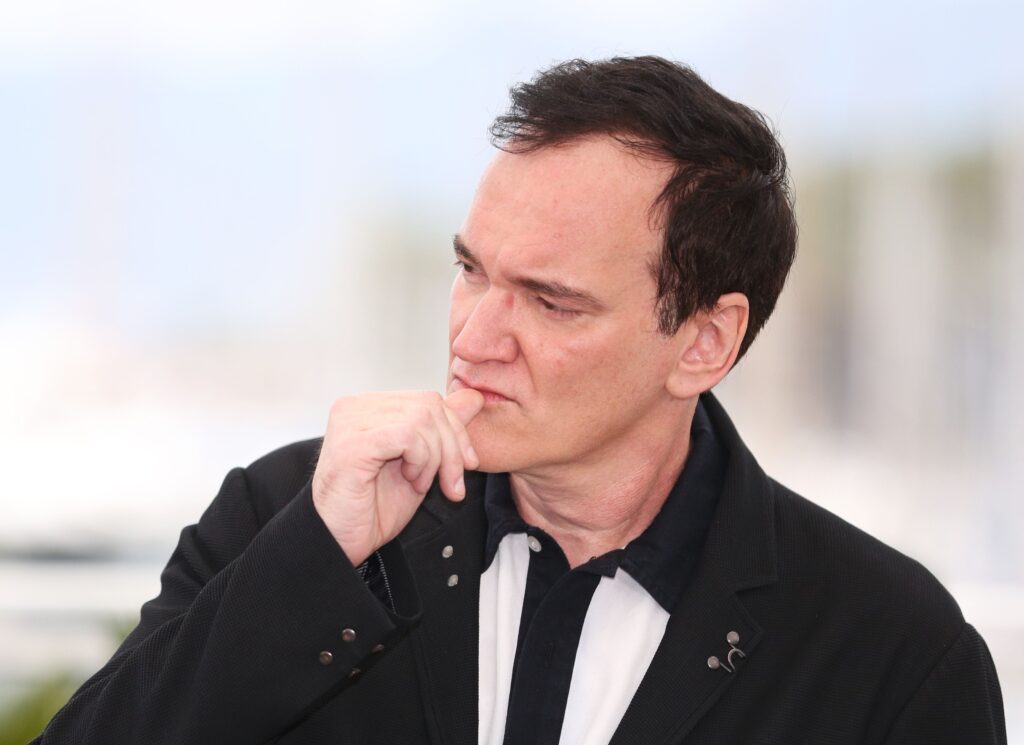
Quentin Tarantino wealth is approximated at nearly $120 million, showcasing his achievements as a director, writer, and actor. His notable projects, such as Pulp Fiction, Django Unchained, and Once Upon a Time in Hollywood, have received both critical praise and commercial success, greatly increasing his financial status through ticket sales, DVD purchases, and streaming agreements.
Besides his directing work, Tarantino has earned significant revenue from penning scripts for films that he didn’t direct, including True Romance and Natural Born Killers, which fetched high prices. His movies also earn income from music royalties, merchandise like soundtracks, and various licensing agreements. Additionally, his roles as an actor and producer have further enhanced his monetary success.
FAQ
Q1. Who is Quentin Tarantino?
Ans. Quentin Tarantino is an American director, actor, and screenwriter, born on March 27, 1963, in Knoxville, Tennessee, USA.
Q2. What is Quentin Tarantino full name?
Ans. Quentin full name Quentin Jerome Tarantino.
Q3. Where was Quentin Tarantino born?
Ans. Quentin Tarantino was born in Knoxville, Tennessee, on March 27, 1963.
Q4. How old is Quentin Tarantino?
Ans. Quentin Tarantino is 62 years old as of 2025.
Q5. How tall is Quentin Tarantino?
Ans. Quentin Tarantino has a height of 6 feet 1 inches, or 1.85 meters.
Q6. What is Quentin Tarantino net worth?
Ans. Quentin Tarantino wealth is approximated at nearly $120 million, showcasing his achievements as a director, writer, and actor.
Q7. Who are Quentin Tarantino’s parents?
Ans. Tarantino’s father, Tony Tarantino, is an actor and musician of Italian-American descent hailing from New York, while his mother, Connie McHugh, is a nurse from Tennessee.
Q8. What recognition did Pulp Fiction receive at the Cannes Film Festival?
Ans. Pulp Fiction (1994) was awarded the prestigious Palme d’Or at the Cannes Film Festival, thereby solidifying Tarantino’s reputation in the international film arena.
Q9. What awards did Pulp Fiction win at the 1995 Academy Awards?
Ans. During the 1995 Academy Awards, Pulp Fiction secured three nominations, including Best Picture and Best Director, and won the Academy Award for Best Original Screenplay.
Q10. How did Reservoir Dogs impact Tarantino’s career?
Ans. Reservoir Dogs (1992) debuted at the Sundance Film Festival and received widespread acclaim, quickly establishing Quentin Tarantino as a well-respected director.
Q11. What was Tarantino’s role in From Dusk Till Dawn (1996)?
Ans. In From Dusk Till Dawn, Tarantino not only penned the screenplay but also acted in the film alongside George Clooney, which played a role in its commercial success.
Q12. What are some common themes in Quentin Tarantino films?
Ans. Recurring elements in Quentin Tarantino’s works include themes of violence, revenge, storytelling that defies chronology, allusions to pop culture, and richly developed characters.
Q13. What is Quentin Tarantino’s directing style known for?
Ans. Tarantino’s style as a director is characterized by its non-linear narrative, captivating dialogue, diverse musical selections, and pay homage to various cinematic genres.
Q14. Has Quentin Tarantino ever collaborated with other notable filmmakers?
Ans. Indeed, Tarantino has partnered with other prominent directors such as Robert Rodriguez on films like “Grindhouse” and “Sin City,” as well as collaborating with filmmakers like Tony Scott and Eli Roth.
Q15. Which Quentin Tarantino film has received the most critical acclaim?
Ans. Pulp Fiction is frequently regarded as Tarantino’s most lauded film, winning the Palme d’Or at the Cannes Film Festival and earning considerable acclaim from critics.
Q16. How does Quentin Tarantino approach the use of music in his films?
Ans. Tarantino is recognized for his careful curation of music within his films, often incorporating well-known songs to enhance scenes and craft unforgettable moments in cinema.






2 Comments
Zümrütevler su kaçak tespiti Erken su kaçağı tespiti, ev onarımlarında binlerce lira tasarruf sağlayabilir. https://mysiterank.org/ru/domain/uskudartesisat.com
Beşiktaş su kaçağı tespiti Ekibin kullandığı termal kameralar sayesinde sorunum çözüldü. https://cottoecrudo.it/?p=31082